Practice Evolution Explorer
Jialiang Xie1,
Minghui Zhou1,
Audris Mockus2,
Xiujuan Ma1 and
Hong Mei1
1School of Electronics Engineering and Computer Science, Peking University
Key Laboratory of High Confidence Software Technologies, Ministry of Education
Beijing 100871, China
Abstract:
Reporting and resolving issues is an essential part of software
development. This is accomplished primarily by volunteers in OSS
projects and by service providers in commercial projects.
Project environment often changes, e.g., the number of users may
increase, and, to be successful, the projects develop new
practices to cope with changes. We want to understand how the
issue resolution practices evolve over time, how efficient and
effective they are, and how they can be improved. We use
ubiquitous records in the issue tracking systems to discover
practice evolution and to quantify their impact. We built Practice
Evolution Explorer (

) tool to visualize and understand issue
tracking data via linked views/selectors representing properties
of issues and issue transitions between states. We illustrate how
to detect inadequate practices and how to quantify the impact of
project decisions on service quality and efficiency. We plan to
apply
in both commercial and open sources projects to improve
the quality of responses to user-reported issues while minimizing
the effort needed to achieve that improvement. In particular, we
would like to investigate how the commercial projects could
achieve the rapid response times observed in OSS.

Introduction
Responsiveness to user issues is essential to software project's
success. In open source projects input from users is critical for
improving product quality, because many issues are found, reported,
and sometimes fixed by early adopters [1]. It is,
therefore, of interest to understand how projects engage users and
volunteers and how such practices evolve in response to external
changes. To achieve that we ask two research questions:
- Can we discover issue reporting and resolution practices and
their evolution?
- Can we quantify the impact of these practices on service
quality and help projects choose most suitable practices?
To answer these questions we first performed a qualitative study to
understand the nature of these practices and their importance to the
projects. In Gnome and Mozilla bug triaging (a common way to refer
to practices used to report and resolve issues) was of great
importance and participants primarily used issue tracking system
both, to understand what is going on and to change some key
practices. ``Processes that limit the size or
potential of our community limit Mozilla. Conversely, making it
easier for people to cooperate, collaborate, experiment and play
enhances the community's
capacity'',
according to a volunteer group developing community management
metrics and tools for Mozilla. It is, therefore, critical to
understand practices employed by a project and to address their
weaknesses. Otherwise valuable contributors might leave. For
example, one long-time contributor left ``because of a general lack
of interest in doing anything substantial to improve the Triage
process''.
Issue-tracking systems are widely used in software projects and they
record the way tasks are assigned, problems are discussed, and
issues are resolved. Such data contains a detailed history of the
project and might provide a way to find out decisions that were
problematic or practices that proved beneficial. To cope with
complexity of issue tracking data we developed Practice
Evolution Explorer, ( ) to
spot anomalies,
and to quantify relevant
measures of service quality (delay and effort). It visualizes
transitions between states, time trends, and issue attributes and,
based on these views, lets user select subsets of
interest.
Using Gnome project
we illustrate how we used the tool to detect several dramatic
changes in the issue tracking practices and how the tool could be
used to rapidly detect the impact of new technology and to find
effective solution.
We make two contributions: First, helps to detect
anomalies (and thus, evolution) in issue resolution practices.
Second, it may help to design better practices and to avoid costly
mistakes by quantifying the potential implications for quality and effort.
We illustrate with two scenarios of practice changes discovered
in Gnome in Section II, and describe design
considerations
and other details in Section III and Section IV.
The related work is presented in Section V. Future work
and summary are in the last section.
Practice Evolution
We illustrate on a large Bugzilla repository of Gnome software
eco-system. Gnome implements user interface functionality, and has
more than 10 years of history and more than 600K issues.
We use term ``issue quality'' to designate the fraction of issues
in the sample that were resolved as fixed. For example, a high
proportion of invalid or duplicate issue reports would waste time
of project participants who need to ascertain the validity of such
issues.
We use term ``service quality'' to refer to the time until 90% of
the issues are resolved (average time is not a robust measure
because of the statistical distribution of resolution times). A
shorter resolution time implies rapid response to user concerns,
thus representing good service quality.
An issue is created by an issue reporter and handled (triaged) by
project participants. In the course of the triage and resolution
issues transfer through a predefined set of states. For example,
Gnome defines standard steps of
triaging. An
issue is reported (born) in an UNCONFIRMED state. When a triager
confirms it as a valid issue, its state is changed to
NEW. Alternatively, if it is, for example, a duplicate, it may be
immediately resolved and its state changed to RESOLVED. When the
report does not contain sufficient information to reproduce and fix,
the state would be changed to NEEDINFO. Issues in state NEW are to
be assigned and need to be resolved. The assignee may accept the
issue (state ASSIGNED), or pass it to someone else (issue remains in the
state NEW), or resolve it (state RESOLVED). However, in practice
the transition sequence varies, as the scenarios below show.
Each ``RESOLVED'' issue has a resolution, e.g., FIXED, DUPLICATE,
INCOMPLETE, or INVALID.
The first simple scenario depicted in the brief
video
illustrates
the adjustment to the policy of reporting issues. The new policy
restricted the population of participants who can report issues
directly in state ``NEW'' instead of state ``UNCONFIRMED''. Issues
in state ``NEW'' are considered to be valid issues while the
validity still needs to be established for issues in state
``UNCONFIRMED''.
With it is easy to detect this change by selecting the issues
that start with state ``NEW'' with the transition filter (see Section IV-D).
The timeline view shows the dramatic rise from 40% of reported
issues in state ``NEW'' in 2001 rising to 60% in 2003 before
rapidly dropping to 10% after April of 2004 (see the black
line in Figure 1) . Investigating what happened
in 2001 (by selecting one year interval in the timeline
view and observing the barchart of the distribution of resolutions)
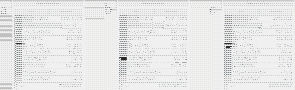
we found that 65% of these ``NEW'' issues were
ultimately fixed, while in 2003 only 60% of them were fixed
(see Figure 2a and 2b).
Figure 1:
A change of ``NEW'' issues in the timeline view
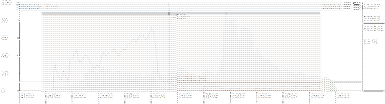 |
Figure 2:
Quality of ``NEW'' issues in 2001, 2003, and 2004
 |
Clearly such drop suggests that the quality of ``NEW'' issues has
gone down and that restricting the pool of participants with a
privilege to report an issue in ``NEW'' state may improve the
situation. The actions undertaken by the project lead to a much
smaller fraction of ``NEW'' issues. However, the issue quality did
not improve: only 50% of the issues reported as ``NEW'' were fixed
in 2004 (Figure 2c) -- an even smaller
fraction than in 2003. Furthermore, the service quality also decreased:
a calendar year prior to April 2004 it took 9 months to resolve 90%
of issues while during the subsequent calendar year it took 9.7 months.
It is, therefore, not clear if the intervention achieved
its desired goals.
The second example of practice evolution in the
video![[*]](/usr/share/latex2html/icons/footnote.png) is driven by the desire to let more Gnome
users participate in issue reporting
via crash reporting tool
Bug-Buddy . As
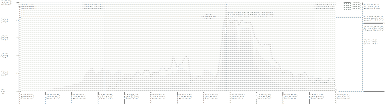
Figure 3 shows, a dramatic peak with 11,600 new
issues is visible in September, 2006, while during the prior month
there were only 2,600 new issues. Of these September new issues,
82% were submitted via Bug-Buddy. While Bug-Buddy was introduced
several years prior to that, the particular version 2.16 that became
available in September has made it much easier
for unsophisticated Gnome users to report
issues.
Earlier, users had to install and configure sendmail package or
report an issue using Bugzilla web site. The innovation initially
looked promising to project participants: ``With
the new Bug-Buddy, we're all receiving tons of new bugs. It's
good, since we now know about some crashers we didn't know
before.''.
is driven by the desire to let more Gnome
users participate in issue reporting
via crash reporting tool
Bug-Buddy . As
Figure 3 shows, a dramatic peak with 11,600 new
issues is visible in September, 2006, while during the prior month
there were only 2,600 new issues. Of these September new issues,
82% were submitted via Bug-Buddy. While Bug-Buddy was introduced
several years prior to that, the particular version 2.16 that became
available in September has made it much easier
for unsophisticated Gnome users to report
issues.
Earlier, users had to install and configure sendmail package or
report an issue using Bugzilla web site. The innovation initially
looked promising to project participants: ``With
the new Bug-Buddy, we're all receiving tons of new bugs. It's
good, since we now know about some crashers we didn't know
before.''.
Figure 3:
A peak of new-born issues in the timeline view
 |
The volume of new issue reports, however, was
overwhelming
and the quality was quite low: only 7% of the new issues had stack
traces with debugging information. Simply having a stack trace is
not as useful as having actual lines of code causing the crash.
Users who could now easily report crashes, did not have enough
motivation or skill to install debugging libraries which would
provide debug symbols, thus improving the quality of the issue
reports. Furthermore, 95% of the issues that needed additional
information to be reproduced were closed with the resolution of
INCOMPLETE because the reporters did not respond to requests for
additional information. As one developer put it:
``The NEEDINFO status is nearly killed by these
incomplete
reports.''
To address these problems, the project introduced
new
technology
and evolved
practices. To
address the issue of missing line numbers Gnome introduced Google
Airbag tool in Bug-Buddy v2.19. Airbag annotates certain crash
reports with compiler-provided debugging information. As a result,
the fraction of invalid issues dropped down to 55% for Bug-buddy
v2.19. From practice's perspective, Gnome community streamlined the
transition UNCONFIRMED NEEDINFORESOLVED
(Figure 4) to UNCONFIRMEDRESOLVED
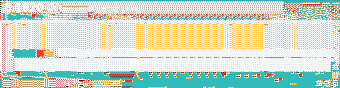
(Figure 5) in May, 2007. Before the change, 90%
reported issues were resolved within 6.18 months (as shown in
Figure 6). The change resulted in an improvement of
service quality by reducing the delay to 1.14 months.
NEEDINFORESOLVED
(Figure 4) to UNCONFIRMEDRESOLVED
(Figure 5) in May, 2007. Before the change, 90%
reported issues were resolved within 6.18 months (as shown in
Figure 6). The change resulted in an improvement of
service quality by reducing the delay to 1.14 months.
Figure 4:
Workflow with NEEDINFO in the transition view
 |
Figure 5:
Workflow without NEEDINFO in the transition view
 |
Figure 6:
Issue resolution time in the process view
 |
Approach
Based on the qualitative study we designed to address two
issues that vexed project participants the most: detecting anomalies
in the issue resolution practices and quantifying the impact of
specific practices.
To accomplish that visualizes and compares various properties
of the subsets of issues that a user can interactively select using
a variety of visual and textual (regular expressions) options.
An overview of is given in Figure 7.
The basic paradigm is that of linked views, where the same set (or sets)
are displayed in a variety of ways to allow:
- display of trends and corresponding anomalies,
- visual selection of subsets of interest,
- quantification and comparison of the issue and service quality
for the selected subsets.
For example, a user can select one year before April, 2004 by
brushing the mouse over relevant period in the timeline view. After
saving the state (shown in the history panel at top-right), user can
select one year after April, 2004. By toggling between these two
saved states a user can clearly see what changed. In
another scenario, a user may select issues that were resolved and
then reopened using a simple regular expression ``S*[UE]'' where S
is an abbreviation for resolved, U for unconfirmed, and E for NEW.
Figure 7:
Overview of
[width=6.5cm,height=3.78cm]global_2.eps |
Views and Selectors
Each view of is designed to present a particular set of
anomalies or to quantify service and issue quality and also serve as
an interactive filter that allows user to select the subsets of
interest for comparison and to quantify issue and service
quality for these subsets.
The timeline view shows trends and serves as date
filter. It is represented by an area chart with date on the horizonal axis
and chosen statistics on the vertical axis. Statistics include Birth
Rate (the number of issues reported during one month), Expiration
Rate (the number of issues resolved during the month), and
Cumulative Issues (open, but not yet resolved). The timeline view
shows two subsets of the selected issue population. The part shown
in darker color represents the entire selection while the lighter
color shows one part of the selection, for example, issues that are
reported as ``NEW''. In addition, the fraction of issues
representing the lighter color is drawn as a black line.
The transition view shows frequencies and delays between the states
the issues pass through. Circles show states and arcs transitions, with
the thickness of the arc indicating one of the following statistics
for the selected set: the number of issues having that transitions,
the total delay incurred for that transition, and the average delay
incurred for that transition. The arcs above the circles go left to
right while the ones below circles go right to left.
As noted above, the transition view is linked with the timeline (and
other) view(s). In particular, moving the time range in the timeline
view shows the animation of the evolution of the transitions among
states.
The process view is designed to quantify service quality. It
provides details of the delay for each transition. The horizontal axis
shows delay and the vertical axis shows the numbers of issues. Each
state is drawn in single color with the width representing average time
and the high the number of issues. The area of each state shows the
total time spent transiting between two states in all selected
issues. Time zero represents the time an issue is created and the
time at which next colored region starts indicates delay between the
time the issue was created and the next state.
The selectors
The transition filter provides visual and textual methods to
select subsets of issues that went through chosen state
transitions.
The resolution and completeness filters (shown in the
top-left of Figure 7) display the number
(and fraction) of issues with each resolution and level of
completeness in the the current subset. A user may also
expand or narrow the current subset of issues by
adding (removing) resolutions or
levels of completeness to (from) the current subset.
Related Work
There has been substantial amount of work on developing tools to
investigate software repositories in order to improve software
production. For example, Expertise Browser [2] presents the
relationships between developers and source code they change to help
determine experts for the code and develop expertise profiles,
Hipikat [3] provides access to the group memory that is
implicitly formed by all of the artifacts produced during the
development for a software project, and Ariadne [4] as a
plug-in for Eclipse offers developers visualizations of the source
code authorship and the potential presence of coordination problems.
More recently,
Codebook [5] tries to discover transitive relationships
between people, code, bugs, test cases, specifications, and related
artifacts by mining all kinds of software repositories, and Lungu et
al. [6] visualize the evolution of software eco-systems.
However, the evolution of project practices through issue tracking
have been neither investigated, nor quantified. In this study, we
visualize the anomalies of issue tracking practices and quantify the
relevant effects. We hope to help developers understand the impact
of their practices and to design practices.
We introduced a visualization tool to detect anomalies in the issue
resolution process and to quantify the service quality and issue
quality. makes it easy to quantify the impact of various
practices and, thus, may help reduce time wasted by developers
on invalid issues and improve service quality by responding to user
issues more rapidly.
We are working on applying in both commercial and open source
projects to help discover and remove inefficiencies in issue
resolution practices.
- 1
-
A. Mockus, R. T. Fielding, and J. Herbsleb, ``Two case studies of open source
software development: Apache and Mozilla,'' ACM Transactions on
Software Engineering and Methodology, vol. 11, no. 3, pp. 1-38, July 2002.
- 2
-
A. Mockus and J. Herbsleb, ``Expertise browser: A quantitative approach to
identifying expertise,'' in ICSE 2002.Orlando, Florida: ACM
Press, May 19-25 2002, pp. 503-512.
- 3
-
D. Cubranic and G. Murphy, ``Hipikat: A project memory for software
development,'' TSE, vol. 31, no. 6, 2005.
- 4
-
C. R. de Souza, S. Quirk, E. Trainer, and D. F. Redmiles, ``Supporting
collaborative software development through the visualization of
socio-technical dependencies,'' in GROUP 2007.New York, NY, USA: ACM, 2007, pp. 147-156.
- 5
-
A. Begel, K. Y. Phang, and T. Zimmermann, ``Codebook: Discovering and
exploiting relationships in software repositories,'' in ICSE 2010.
New York, NY, USA: ACM,
2010, pp. 125-134.
- 6
-
M. Lungu, M. Lanza, T. Gîrba, and R. Robbes. ``The
Small Project Observatory: Visualizing Software Ecosystems.'' in
Science of Computer Programming, Elsevier 75(4) p. 264—275, April
2010.
Footnotes
- ...
video
-
- ...
Bug-Buddy
- When an application using the GNOME libraries
crashes, Bug-Buddy generates a stack trace using gdb and invites
the user to submit the report to the GNOME bugzilla.
[email protected]